

Certificates that protect people, property and licences.
From landlord EICRs and consumer unit upgrades to commercial fire alarm servicing and emergency light testing, Phoenix Maintenance keeps homes legal, businesses open and insurers satisfied, with digital certificates issued fast and reminders sent before anything lapses.
The report that proves your electrics are safe.
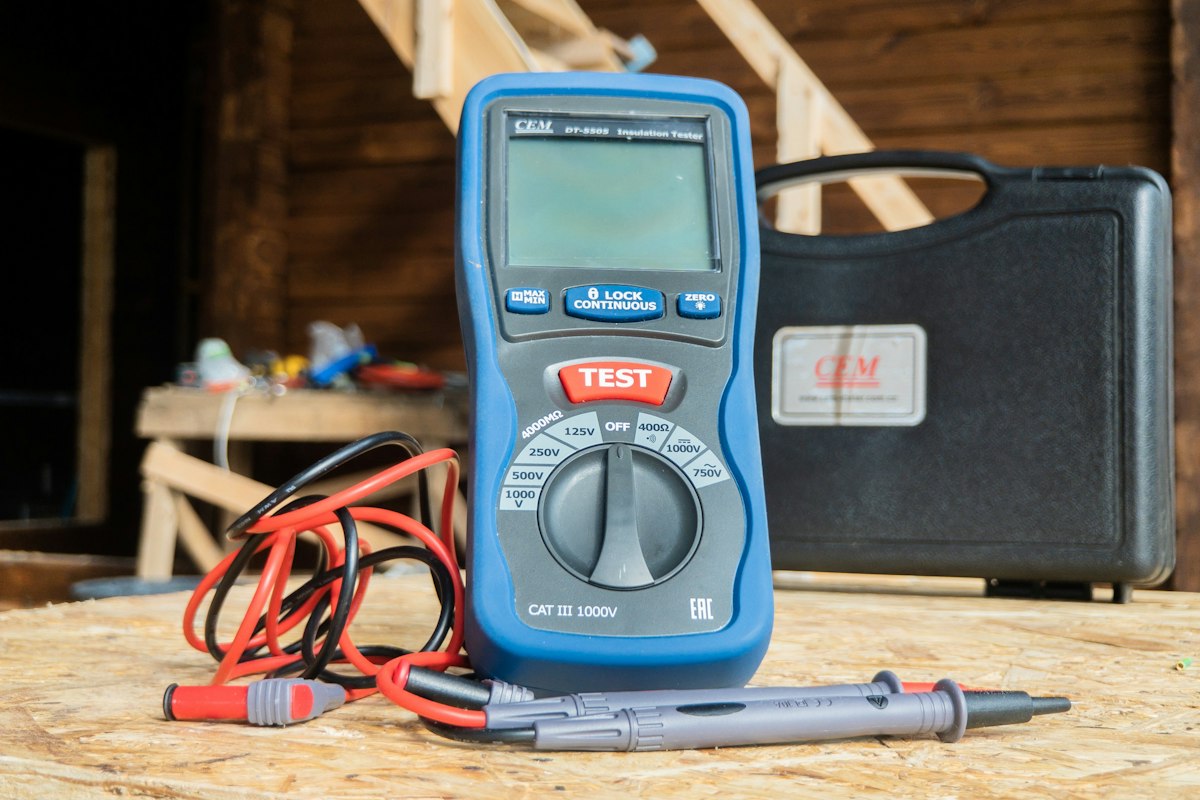
An EICR is a formal inspection of a property's fixed wiring, consumer unit, circuits, sockets, switches, earthing and bonding, carried out against BS 7671 and graded with clear observation codes: C1 (danger present), C2 (potentially dangerous), C3 (improvement recommended) and FI (further investigation). C1s and C2s produce an "unsatisfactory" report until remedied; C3s don't.
For landlords, an EICR every five years is a legal requirement in England for private rented homes, with a copy supplied to tenants within 28 days and remedial work completed within 28 days of an unsatisfactory report. Fines for non-compliance run up to £30,000 per breach. For homeowners, an EICR is strongly recommended every ten years, when buying a property, or before major renovation. For businesses, periodic inspection underpins your duties under the Electricity at Work Regulations 1989, and it's the certificate your insurer will ask for after any incident.
- Honest coding: we grade to the standard, not to generate work; every observation is photographed and explained in plain English.
- Remedials priced separately: a clear itemised quote you're free to take elsewhere (though 9 in 10 clients don't).
- Fast reissue: once C1/C2 items are fixed we reissue your satisfactory certificate, usually within 24 hours.
- Portfolio scheduling: agents and landlords with multiple properties get one contact, one schedule, one invoice.
Every certificate a property ever needs.
| Service | Who needs it | How often | Guide price |
|---|---|---|---|
| Domestic EICR | Landlords (legal), homeowners, buyers | 5 yrs rented · 10 yrs owned · at sale | from £190 (1-3 bed) |
| Commercial EICR | Offices, retail, industrial, HMOs, blocks | Typically 5 yrs (3 for industrial/pools) | from £250, per-circuit priced |
| Emergency light testing | All commercial & communal areas | Monthly function · annual 3-hr duration | from £150 per visit |
| Fire alarm servicing | Commercial premises, HMOs, blocks | 6-monthly to BS 5839-1 | from £190 per visit |
| PAT testing | Businesses, landlords with appliances | Risk-based, typically annual | from £1.50 per item (min. call-out) |
| EIC / Minor Works | Any new circuit or alteration | Per job | Included in our installation work |
| Fault finding & repairs | Tripping circuits, dead sockets, flickering | As needed | from £95 first hour |
All certificates issued digitally through NAPIT-recognised software, stored for you, and flagged for renewal before they expire, so compliance becomes something that happens to you, not something you chase.
The most important safety upgrade most homes never make.
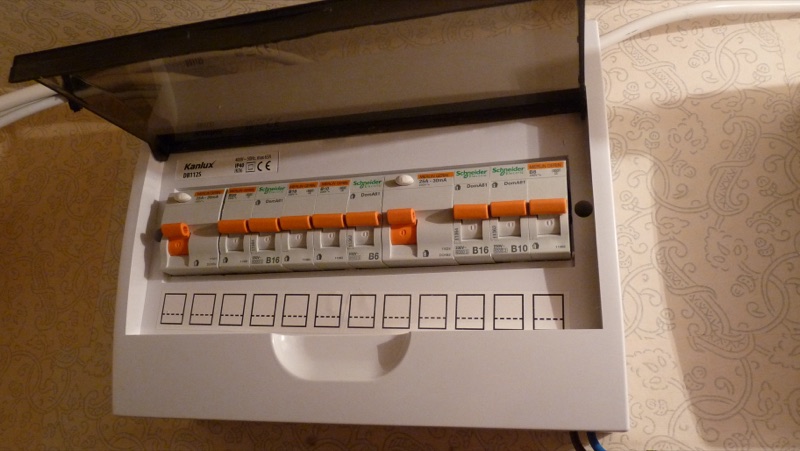
If your fuse box has rewirable fuses, a wooden back board, or no RCD protection, it predates the safety devices that stop electric shocks and electrical fires. It may still "work", right up until the moment you need it to protect someone.
We replace ageing boards with modern, all-metal consumer units fitted with individual RCBOs on every circuit, so a fault in the kitchen doesn't black out the whole house, plus surge protection (SPD) to shield the electronics modern homes are full of, and where appropriate arc fault detection (AFDD) for the highest-risk circuits. Every upgrade includes full testing of your existing circuits, tightening and remaking of connections, updated circuit labelling, and an Electrical Installation Certificate registered with Building Control.
- Half-day installation: most swaps completed in 4-6 hours with power restored circuit by circuit.
- Pre-upgrade circuit testing: hidden faults found before the new board goes on, not discovered by tripping afterwards.
- EV & solar ready: ways allocated for the charger or battery you might add next year.
- From £550 fitted: including certification; exact price confirmed after a photo survey of your board.
Life-safety systems, designed and maintained to British Standards.
Under the Regulatory Reform (Fire Safety) Order 2005, the responsible person for any commercial or multi-occupancy building must ensure appropriate fire detection and emergency lighting, and must be able to prove it's maintained. We design, install, commission and service both, and keep the logbook evidence that keeps you defensible.
Fire alarm systems, BS 5839-1 & 5839-6
We design systems to the category your fire risk assessment actually calls for, from L1 full-coverage life protection to P-category property protection, using conventional panels for smaller premises and addressable systems for anything larger, where the panel names the exact device in alarm.
Installation includes zoning to your building plan, call points, sounders and visual alarms for accessibility, interfaces to door holders, access control and AOV systems, and commissioning certification. Servicing follows BS 5839-1 at six-monthly intervals, with weekly test guidance provided for your on-site team and remote monitoring available for out-of-hours response.
Emergency lighting, BS 5266-1 & EN 50172
When the power fails, your escape routes, exits, stair cores, plant rooms and open areas must stay lit long enough for everyone to get out. We install maintained and non-maintained emergency luminaires and exit signage designed around your actual escape routes, not just a fitting by each door.
Compliance then rests on testing: a brief monthly function test of every fitting, and an annual full-duration (3-hour) discharge test proving the batteries genuinely last. We carry out both on a planned schedule, log every fitting individually, replace failed batteries and lamps on the spot where possible, and issue the certificates your insurer and fire officer expect to see.
Fire risk collaboration
We work from your fire risk assessment and flag where the installed system no longer matches the building's use, before an inspector does.
HMO & block specialists
Grade and category advice for HMOs and communal areas, where getting BS 5839-6 grading wrong is the most common licensing failure we see.
One combined visit
Fire alarm service, emergency light test and EICR scheduled together, one engineer, one disruption, one consolidated compliance pack.
Compliance on autopilot for businesses and portfolios.
For managing agents, facilities teams and multi-site businesses, we bundle everything above into a single planned maintenance contract: one annual schedule covering EICR cycles, fire alarm services, emergency lighting tests and PAT testing across your whole estate, with a shared compliance dashboard showing exactly what's certified, what's due and what's outstanding at every property.
- 24/7 emergency call-out: contract clients get a guaranteed response for electrical faults, day or night.
- Priority scheduling: planned works booked around your trading hours, including nights and weekends.
- Consolidated invoicing: one monthly or quarterly invoice instead of a drawer of call-out bills.
- Audit-ready records: every certificate, logbook entry and remedial quote in one shared folder.
The compliance questions we hear every week
A typical 1-3 bed home takes 2-4 hours; commercial premises are estimated from circuit count. Power is off in short bursts as circuits are isolated for dead testing, we sequence around anything critical (fridges, servers, tills) and can test out of hours for trading businesses.
Don't panic, it's common in older properties and it's fixable. Your report lists exactly which observations caused it (C1s and C2s). We quote the remedials as itemised line items, complete the work, and reissue a satisfactory certificate. For landlords, remedial work must be done within 28 days, so we prioritise these bookings.
Yes, it's the part most premises fail on. BS 5266-1 and EN 50172 require a brief monthly function test of every fitting plus the annual full-duration test, all recorded in a logbook. A missing logbook is treated by fire officers and insurers as a missing test. Our planned visits handle both and maintain the records for you.
It depends on the size and layout, but most licensable HMOs need at least a Grade D1 interlinked system in the lets with additional detection in communal areas, and larger HMOs step up to panel-based Grade A systems to BS 5839-6. Councils vary in their exact requirements, so we design to your licensing authority's published standard and provide the certification they ask for.
Both, and that's deliberate. Because we install as well as inspect, our reports are written by people who know what fixing each observation actually involves, and remedials are quoted with real prices rather than alarming vagueness. You're always free to take our report to another contractor; it's written to stand on its own.
Yes, it's one of our most common onboarding jobs. Send us whatever records exist (or don't), and we'll audit each property's certificate status, build a single renewal calendar, prioritise anything already overdue, and take it from there. Within one cycle, the whole portfolio is on the same tidy schedule.